'I’m About as Bullish on Downtown as I’ve Ever Been': Derek Stevens on the New Vegas Traveler


Circa CEO Derek Stevens is as keen on downtown Vegas as ever, as the city continues attracting travelers looking for more than gambling. (Photo: Vanessa Alves-Johnson/Casinos.com)
LAS VEGAS – Sitting inside one of Circa's new Platinum rooms, I couldn't help but look out the window at downtown Las Vegas and think about how wonderful it would be to have a staycation right near the nightlife world that is Fremont Street.
That room (and many others on the same floor) had the kind of Vegas views that make it easy to forget you're supposed to be working, but I was there for a conversation with Circa CEO Derek Stevens about much more than just the resort's newest rooms. Stevens has been one of the most visible figures in the Vegas casino ownership for nearly two decades, owning The D, Golden Gate, and Circa Resort and Casino.
Stevens opened Circa in December 2020 and is also the face of Circa Sports, whose high-stakes football contests are currently being featured in the “Circa Survivor: Quest for $18.7 Million” online docuseries.
Casinos.com recently visited Circa to check out the new Platinum floors added to the hotel last Tuesday, a collection of 49 new rooms and suites. After the tour, Stevens sat down to chat about why he sees today's Las Vegas traveler being more selective about where they spend their vacation dollars, creating an opportunity for downtown to capture more luxury business.
Our conversation wasn't only about what Stevens is adding. I also asked him about something that's going away: the Downtown Las Vegas Events Center (DLVEC). Stevens made the tough decision to convert part of the DLVEC into a parking lot, to the dismay of many I know in the entertainment and rave scenes. During our interview at Circa, he offered a look at his vision for downtown and what he believes the area needs next.
Circa Is Betting on a More Discerning Vegas Traveler
Given the number of high-end suites being added, I wanted to understand why Circa decided to make the investment. He said they deliberately delayed the construction of Circa’s final floors.
When the property opened in 2020, there were only about 500 rooms, and they left several floors untouched to understand the guests before committing to the final product.
By the time the Platinum Floors were ready, Stevens told us he was really confident he could read the room on the new Las Vegas visitor. He argues that today’s traveler looks different from the gamblers who drove the city’s growth in previous decades.
“People are working as hard as they ever have in their careers, and I think they’re probably a bit more discerning about when they’re going to take time off,” he said. “They want to make sure that the experience is really worth it.”
Nowadays, people come to Vegas for much more than just gambling, whether it’s checking out impressive restaurants and bars or high-end shopping malls. Convention travel has also become an increasingly important part of the city’s tourism economy.
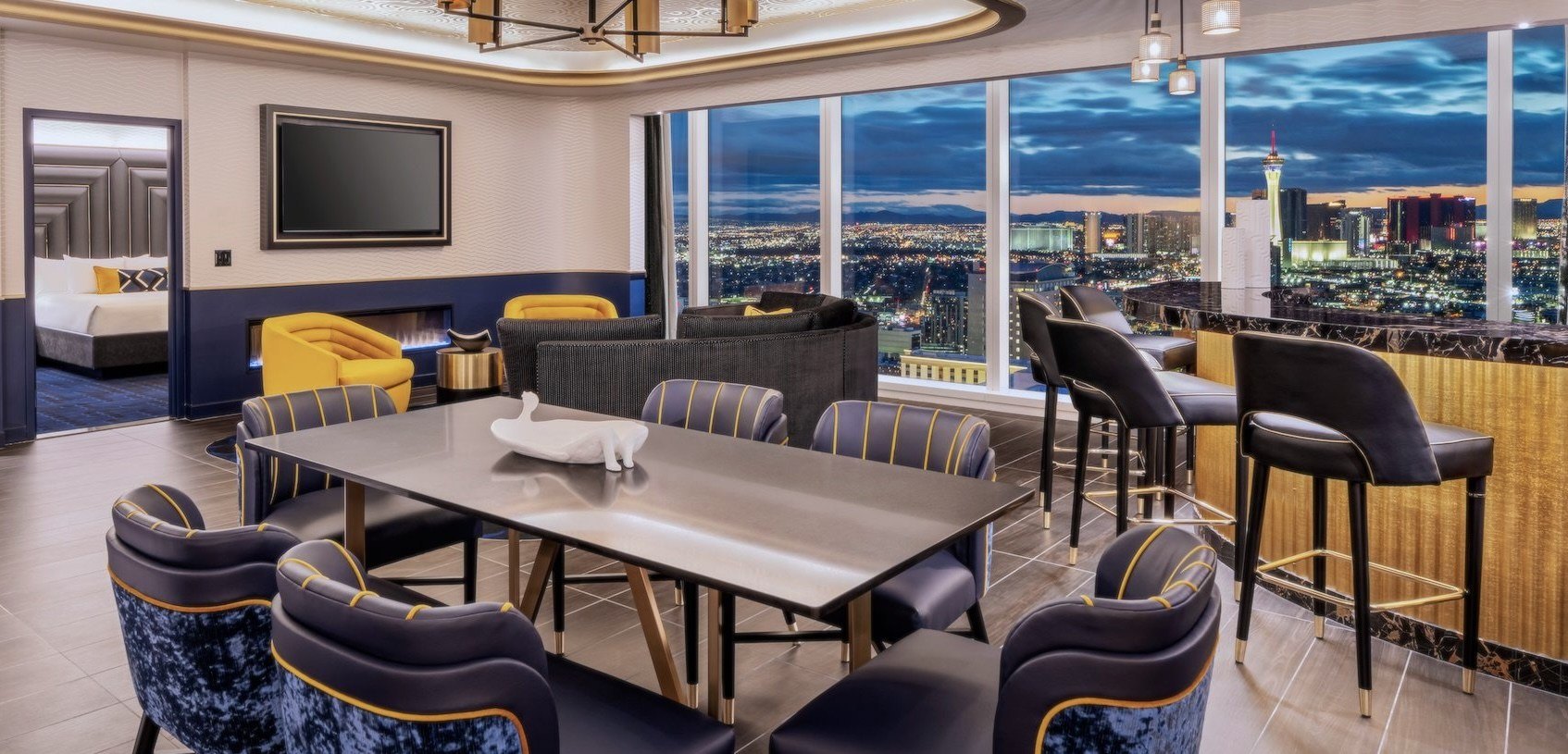
The Platinum Floors are part of Circa’s answer to the changing travel habits. Every room has been finished with suite-level amenities, such as refrigerators, king beds, and extra high ceilings.
The extra ceiling height was an architectural feature baked in from the beginning because the floors were originally meant to accommodate full parlor suites. Even though the plans changed, the design team kept the taller ceilings and brought in furniture and fixtures to match the vibe.
“Even when you renovate something, it’s not like you can add an extra four inches of height to any building,” Stevens said. “So we thought it was great to finish off the floors with all-suite-level amenities.”
Stevens is clear that Circa isn’t abandoning its more accessible offerings in this luxury-focused era, though. The property still has standard rooms for those who want to stick with the basics, and they even brought back an all-inclusive package for this summer. But he’s also direct: the top of the market is really where the growth is, and the Platinum Floors are built specifically for that guest.
Stevens Says Downtown Is Americana at Its Best
We also talked about how downtown fits in the broader picture of Las Vegas, especially with the Strip a bit further south on Las Vegas Boulevard. Stevens rejects the idea that downtown has to compete with the Strip, seeing the two areas as serving different yet overlapping purposes.
“The Strip has 160,000 hotel rooms, and downtown’s got about 6,000 or 7,000,” he said. “Our models are a little different, but I think we’re really complementary.”
He’s (unsurprisingly) got a lot of pride in downtown, calling it “Americana at its best” compared to the Strip. According to Stevens, downtown tends to attract a younger, less international audience than the Strip, which influences how Circa approaches many of its promotions.
On the international side, we talked about the At-Par program, one of Stevens' recent initiatives aimed at welcoming Canadian visitors back to all three properties he owns. The program sets up a direct one-to-one conversion between Canadian and U.S. dollars, which Stevens said has genuinely helped amid a broader decline in visitor numbers from Canada to the U.S. in recent years.
Stevens grew up in Detroit, where Canada was just across the river. The proximity shaped his desire to make visitors from Canada feel welcome in 2026.
“Visitation for us has been up over double because of the At Par program,” he said. “Because of politics, some Canadians have taken the position that they don’t want to visit. I thought it was important to let them know that they’ve still got friends here and they’re still invited.”
Stevens said the program carried little risk from his perspective. He also said businesses cannot assume international visitors already feel welcome in the U.S., which is why he wanted Circa to make the invitation explicit.
Sorry, Ravers: Stevens Has Other Plans for Hallowed Event Center
As an avid Vegas raver, I couldn’t sit down with Derek Stevens without asking about his reasoning for turning the Downtown Las Vegas Events Center (DLVEC) into a parking area. Stevens owns the land the DLVEC sits on, built on the site of the former Clark County Courthouse in 2014. The decision has frustrated parts of the local entertainment community, particularly people who came to the venue for concerts, festivals, and raves.
Stevens put the DLVEC in the context of downtown Las Vegas’s longer story, adding that its purpose extended beyond being an event venue.
“Around the time the Mirage opened, all of the major capital investment was downtown, but then it ended up moving towards the Strip,” he said. “There was a 25-year gap in capital investment downtown, so you effectively have a generation of Las Vegans that never came downtown.”
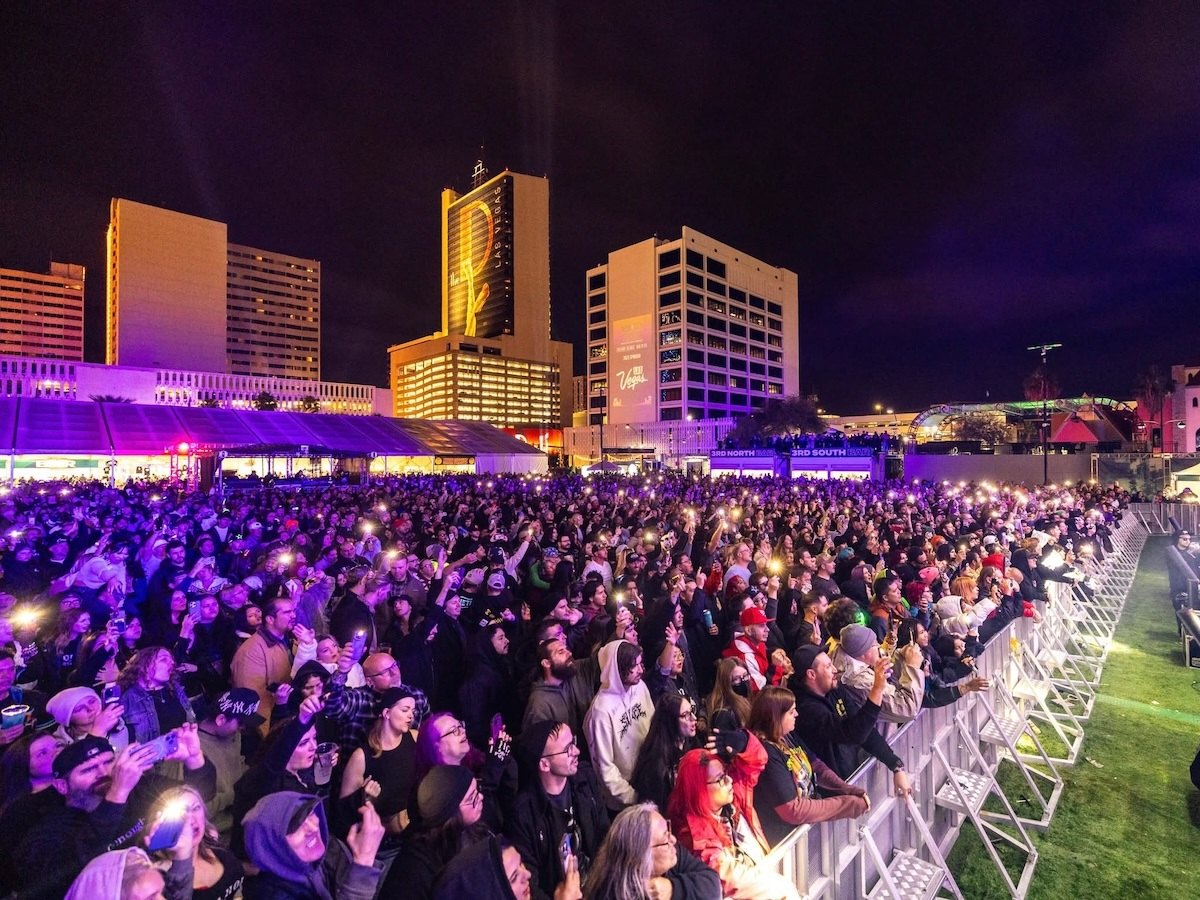
He said that the DLVEC was designed to solve that problem rather than become a permanent entertainment destination.
“Our biggest issue was needing to teach people where downtown is and even what exit to get off at,” Stevens added. “I think the Event Center did a great job of doing that, it ultimately did what we wanted it to do. Right now, with all the other people moving downtown, we need a little more parking.”
With that mission accomplished in his view, Stevens’ higher priority now is adding more parking. Downtown is growing fast, with high-end apartments and condos filling up nearby in Symphony Park. There’s even more activity now in the east part of Fremont Street and the Arts District, which brings additional foot traffic.

Though Uber and Lyft are always an option, many locals want the freedom to drive down and park. He sees parking being a more pressing need right now than booking additional shows at the old venue.
Be still, your aching hearts, locals! The DLVEC isn’t disappearing entirely just yet. It will still host occasional events, including the upcoming Neon City Festival from November 20 to 22, featuring artists like Kaskade, Subtronics, and Fat Joe. But its role as a regular concert venue will be changing as Stevens prioritizes parking and the area’s continued development.
“I’m about as bullish on downtown as I’ve ever been,” he said. “I’ve been here since 2006, but to see this investment coming in and people moving downtown is something really great.”

Meet The Author
Experience

Vanessa is a news writer who brings hospitality industry insight and sharp storytelling to her editorial work for Casinos.com. She graduated from UNLV with a degree in journalism, and has experience working in the Las Vegas gaming and entertainment industry with Station Casinos and Wynn Resorts. She is passionate about staying informed on what’s happening in the world and finds story ideas not only scouring the web, but also by hitting the pavement and exploring the city she loves. When not living the casino high-life, you might find her in a quiet corner somewhere reading a good manga.
Read Full BioRelated News
![[Video] Elon Musk’s Boring Company Drilling Las Vegas Tunnel Network Under Westgate Casino](https://www.casinos.com/cdn-cgi/image/f=webp,q=86,fit=cover,g=auto,w=323,h=162/https://objects.kaxmedia.com/auto/o/192479/97eb340d1f.jpeg)







Test Your Luck
Not Your Spam Filter
Sign up to receive emails and promotions from Casinos.com